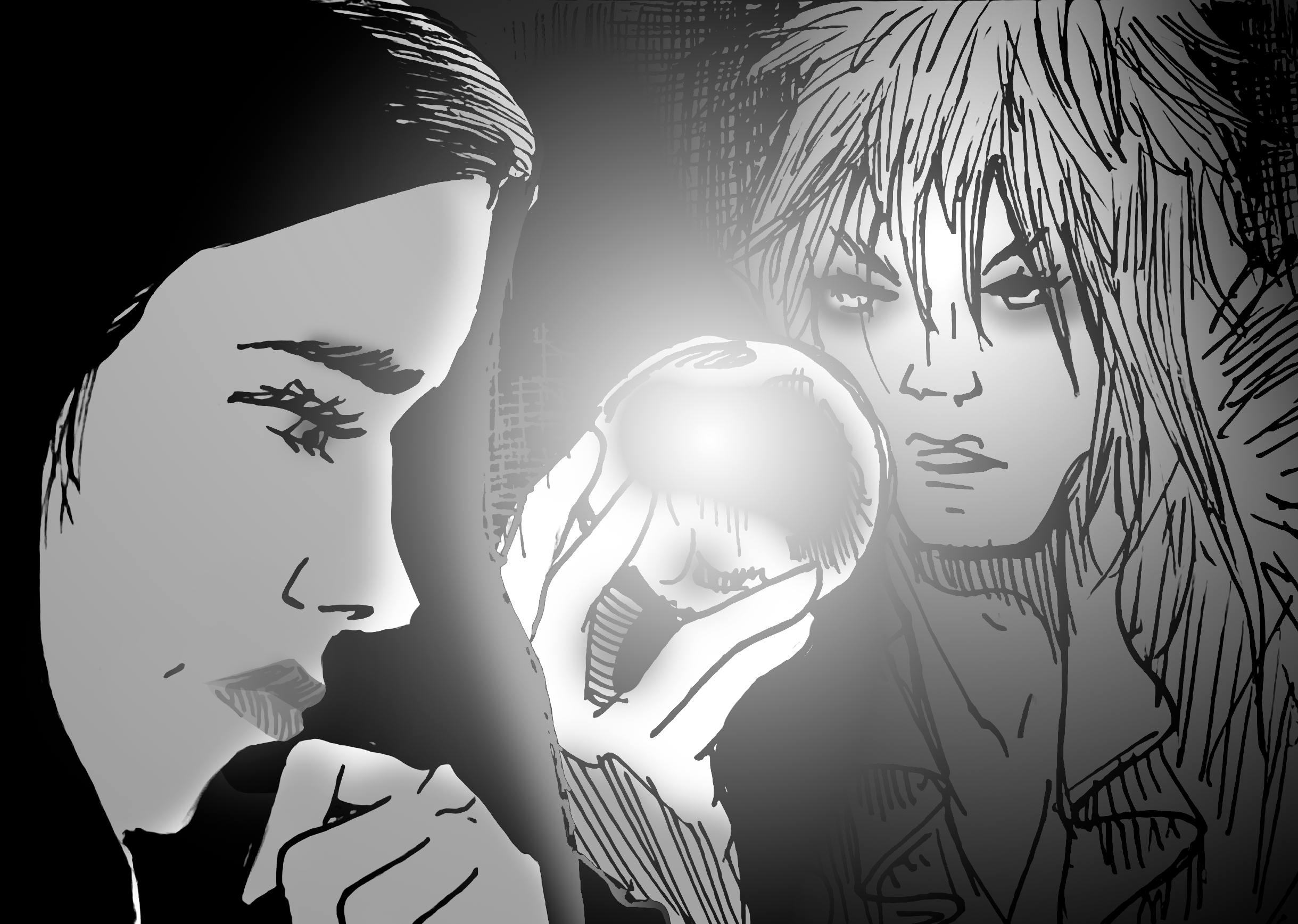
The Labyrinth is about navigating the complicated dynamics of adulthood. Starting off as an impulsive and innocent girl, only to learn to take the mantle of accepting responsibility and ownership. Changing her views from the previous dreamscape to more logical and realistic views. But at what cost? Does she outgrow potential romance? Or was her view of romance the stunted factor? Or is it Jareth’s emotional ceiling?
In the beginning, we see Sarah as young, naïve, and inexperienced. She doesn’t have dates with a boy and is caught up in her fantastical views of potential that she magnifies every inconvenience in her life to not being fair. “It’s not fair!” being her common mantra.
Despite the unfairness of her life, she tells us of her power she’s been given. Is this power over the Goblins? Or maybe over Jareth? Or over their entire world?
From before he appears, he already fulfills her demanding wish without expecting anything in return. Not just to take the baby away, but to do it “Right now.”
Jareth’s Entrance
Jareth comes with magic and glitter, demonstrates his power, with his extravagant clothing and display of his masculine power. She begs him to change. But he can’t. That’s not who is in Sarah’s mind. He tells Sarah to not defy him while holding a threatening snake, only to toss it on her, yet it turns into a gentle scarf before the snake could coil, disarming the threat.
But is she truly scared? Or is she enamored by his splendor and his compelling gaze? She does after all seem to project confidence, power, and authority onto Jareth.
“What a pity” is Jareth’s constant chide concerning Sarah’s naivety and innocence. We see this early on through her surface level questions, always taking everything for granted, blindly accepting answers, like a child.
After he takes Toby, he is looking for commonality, a friend, maybe one he can raise that has the same level of authority as him. He needs someone because he’s isolated, no one else understands him, and he’s bored. He needs a challenge, one that doesn’t bend as fearfully as the goblins, but one that actually does defy him.
Yet, Jareth is willing to forget anyone he chooses. And yet he is surprised that Sarah made it to the oubliette. What an interesting word to use, and so specific! I want to focus on this particular word because it’s the most advanced word of the script, and Hoggle defines it as being ‘a place to forget something’. And in the very next scene, Jareth appears and forgets his name. Even Sarah can’t get his name right until the story advances further. I think this is a strong correlated idea that Sarah projects Jareth because neither remember Hoggles name, despite their slave/ruler relationship. But Jareth didn’t forget about Sarah.
Sarah Draws Near
Interestingly we see that as Sarah gets closer, Jareth’s interest in the baby wanes. He finds her more compelling by the hour. Which is why I believe he wants to trap her in his realm. This is why he drugged her introducing the trauma of the ballroom scene where she was introduced to the moment where innocence and knowledge overwhelmed her. That trauma with the soft song of a “sad love”, “but I’ll be there for you, as the world falls down.” It’s only when she’s dancing with Jareth, she sees how wrong everything was.
And the next scene, Sarah takes the moment of her trauma and girlhood dream of going to a ball, and calls it junk. This begins the claiming of her knowledge into adulthood and claiming it for herself. Even to the point of claiming her confronting Jareth, facing his power, is only for her to conquer.
Jareth is tired, exhausted by the expectations she has for him. Bringing to light all he’s done for her. How generous he was. But she changed, and expected him to change as well.
The Final Encounter
When she confronts him, he pleads with Sarah about obeying him, it’s not as demanding as he is with the goblins. He offers her dreams, represented as the crystal ball.
“I ask for so little. Just let me rule you, and you can have everything you want… Just fear me, love me. Do as I say. And I will be your slave.”
He sees her as an equal. One that he’s willing to be a slave to.
The only issue is, Sarah is still innocent to relationships. She’s inexperienced. Whatever she did want with Jareth, he can’t satisfy. Jareth can’t educate her. His limits are the extent of her knowledge and imagination. That being said, he doesn’t know how to reciprocate actions and feelings with Sarah, only the extreme ideas. Those same gothic ideas that Sarah wistfully lauded from the beginning. That erotic tension, that’s all he knows.
The moment when things become too intense, when it becomes too real— the fantasy he based on from Sarah’s imagination breaks, and his world shatters.

What Breaks First
It makes me ask, how is this exemplified in our interactions? Do we also build up the idealized version of relationships, and when it reaches a breaking point, does it shatter the entire scope of that relationship? Could Sarah’s and Jareth’s relationship truly work out despite her moment of adulthood? Or was Jareth doomed from that moment going forward since he was at his arrested development? I believe Sarah could not go back with Jareth, because Jareth represents something more than just a fantasy character, but a state of mind that can’t reciprocate and grow despite all the power he has.
Jareth doesn’t understand his role in a relationship. He only knows power and authority. He doesn’t convey reciprocity well. But he tries to level the playing field. He expects total commitment without understanding what it requires. And that’s only because Sarah doesn’t know what to expect of it.
But I think that begs the question, how should Jareth have grown? What could Jareth have done to be worthy of Sarah’s next move? And what did Sarah need to believe about Jareth to make that dynamic actually work?
Holding his world still and unbroken would mean Jareth was abusive and powerful beyond Sarah’s will. Maybe if the world collapsed and he remained, that would demonstrate his unrequited love… instead he flew away. Maybe because he flew away, he was not ready to grow within that relationship dynamic, but needed to find someone that would have an unchanging love that didn’t require growing together. One that he could take in as his new queen.
The Last Omen
A slight reflection on Jareth at the end, specifically what he turns into at the conclusion of her fantasy. A white barn owl. I’m always looking at symbolism, and this is another prime example. The owl is the silent observer and takes control of the night. Symbolizing tormenting loneliness and inhabiting ruined places. They represent the need to embrace change for growth, messengers between the physical and spiritual worlds, ability to navigate in total darkness and their silent flight symbolize the ability to “see” and understand things that are hidden, guardians of sacred knowledge.
The choice of animal, as owls don’t like being cuddled or petted can additionally imply he’s not ready to reciprocate in something beyond his loyalty. Even their heart shaped face could be a representation of Jareth’s undying love despite being Sarah’s fantasy slave, while also being an omen of death signifying the ending of his own existence as he disappears, waiting for her to bring him back to life once more.
Sarah’s Role
Interestingly enough, I don’t think his role ends right when Sarah destroys his world. Not only did Jareth leave, but his authority broke all across the Labyrinth as we see the cast returns to Sarah, essentially becoming the Goblin Queen since she destroyed his world. Where she brings back the beings of that ruined fantasy and now commands the narrative with her friends and his minions.
I think it’s an interesting dynamic, one that can be seen from either angle of man and woman taking either place of this dynamic. Did Jareth love Sarah? Or the version of himself that Sarah created? Jareth’s power is literally created by Sarah, did she not want to see that demonstration of power from the beginning? Everything from his codpiece and rocker glam to the way he manipulates the world around her, is all her doing.
He did it for her.
And she created him.
But what does it mean for Sarah? The coming of age moment now feels lackluster. Perhaps it’s the recognition of her own idealistic expectations being too demanding for Jareth to amount to. Or the crumbling of her perception of that dynamic, something that eroded so much it can never be repaired.
For Sarah, meaning came from her new friends. A new narrative for who she now is. And an abandoned fantasy.
Did Sarah destroy her own fantasy and what now does she have to look forward to? How does Sarah grow from the dying Labyrinth without her erotic idol?
Does the idea of this movie also insinuate that sometimes… fantasy is better than reality?…
Leave a Reply