Infrastructural Decisions are required for Functional Health.
Background
My father, having worked tirelessly for his legacy and family, passed away a couple years back. And I believe it was mainly due to the complications that typically come with cancer.
But it does create a moment of awareness when we witness that situation in relative proximity. This was the basis of my own awareness and perception of how I need to optimize my own health the best I can. Whether that’s through my diet, mobility, habits, or other important factors.
But how do I make it a part of my life not just a fleeting momentary impulse?
Diagnosis
I’ve developed a dear friendship with a retired neurological occupation therapist. We have lengthy discussions on a range of topics, such as: health, psychology, spirituality, diet, and more.
She and her husband being in their 70’s, and as active as they are, has really set the bar high for what my life needs to look like in terms of bodily functionality.
Her friendship got me thinking of my own health, from functional health to reducing inflammation in my body. The overarching theme being to optimize my lifestyle and habits.
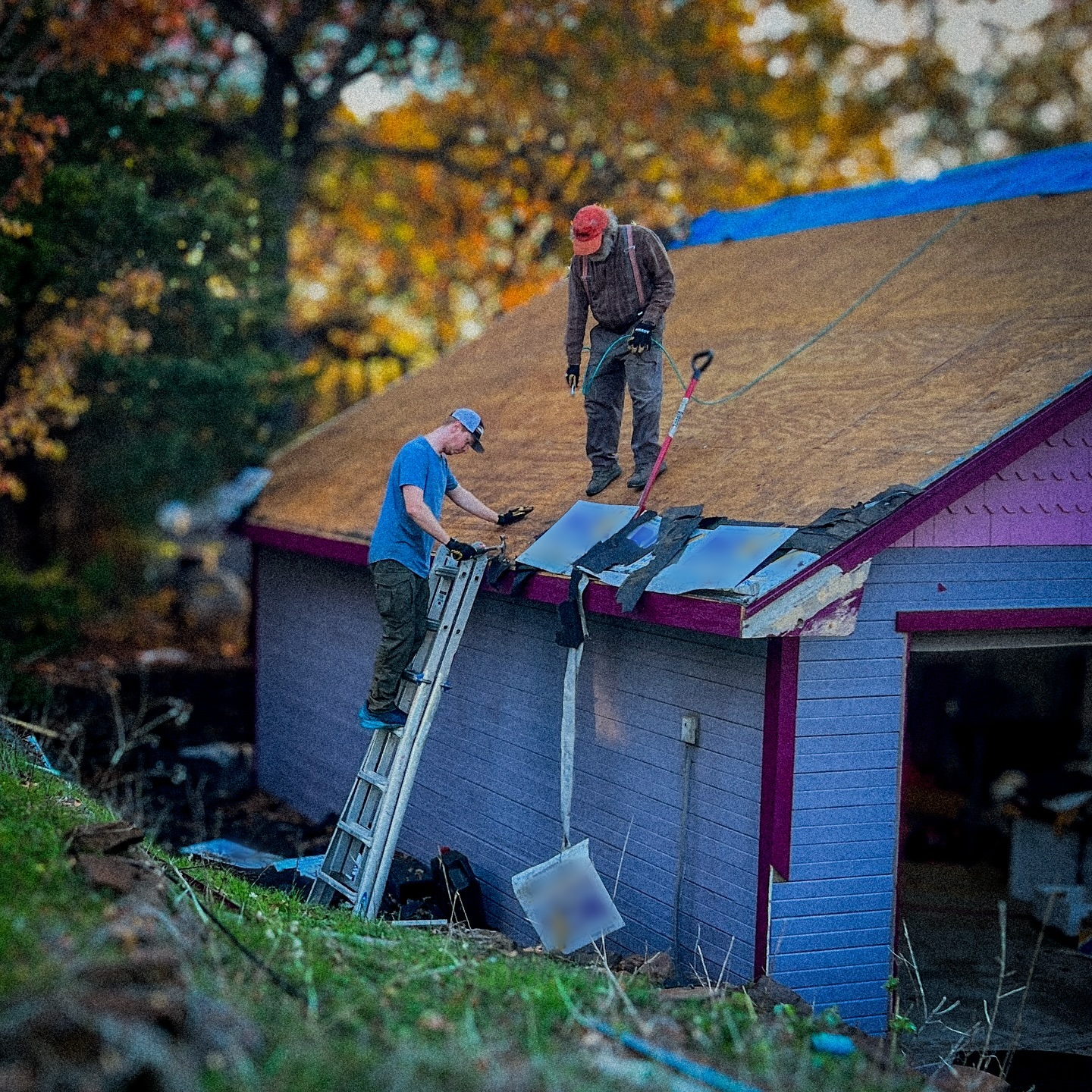
As I was helping with some work on their roof with her husband, like I said they are very active, she saw me working and addressed a couple concerns she noticed. Weak ankle stability and under utilized core.
Working on a roof would mean my posture had to be even more bent over to lower my center of gravity and could only work in certain positions. Not optimal for removing shingles, and an environment that can create slipping and tripping hazards.
I didn’t just see it as a warning to be careful on the task at hand, but rather the potential long term effects after that day.
I had to create better ankle stability. But this isn’t just an isolated issue. There’s a foundational element that got me to this point. That is what needs to be corrected.
What conditions in my daily environment are producing this problem, and how do I change those conditions permanently.


Investigation
I researched from toe splay, to strengthening joints and tendons, to building intrinsic foot muscles, and more. And while I believe these are all very important to building that throughline, another thought kept coming back. You can build strength back up, but what is the course of action to make it last longer than just a few months?…
So I did some more research, learning about previous foot patterns, relating to how we’ve seen other cultures use methods like foot binding for appearances with horrific outcomes. It made me reflect on our current aesthetic choices and how they may not be optimized for healthy feet. Particularly the idea of the infrastructure we have for our feet. And since we don’t get our shoes custom made, but are off the rack, the commercialized product is now our restrictions for something as vital as our feet.
Reflecting on how products are advertised, it got me asking other questions. Currently, shoes are advertising things like ‘ankle support’ and ‘soft/cloud like steps’. Are these things that help our body build strength? Or is this solely for comfort?
Building strength is uncomfortable. It’s meant to be!
When we prioritize comfort, we are not optimizing our growth.
This really got me thinking of other things in life that we don’t do, solely for the idea of ease and comfort, or for aesthetic choices or fear of public opinion. I looked into areas that I needed to change my own infrastructure.
This idea of infrastructure is not meant as a quick fix, but an implemented solution that is added to my life.
Going Barefoot
In this particular case, I opted for barefoot shoes after I read some studies that talked about the building of intrinsic foot muscles. I rationalized that if it helps build my intrinsic foot muscles, it likely meant it amplified the times I was on uneven terrain, meaning it would also double as exercise for ankle stability.
The first time I put them on, it was definitely uncomfortable. I felt every bump on the ground. I had to learn to walk differently! When I previously walked, I could take large long strides. That did not work with these barefoot shoes. After one walk with my normal stride, my heels ached. With no heel cushion, my heel was taking the brunt of the impact. I had taken a slight misstep in how I imagined I’d be able to integrate this new lifestyle.
As I worked up my foot strength and used the new shoes, I eventually took them on a couple hikes. I used this time not only as a small foot workout, but to also focus on how my feet felt. If I noticed weaknesses and how I was moving. And I recognized that this environment was doing much more than walking on paved and carpeted surfaces. The variety of experiences was truly challenging. But how could I implement it in my daily life? Into my infrastructure?
If uneven terrain is what helps develop ankle stability, from angled climbs to undulating walking surfaces to unpredictable pivots, then maybe there are other exercises or tools I can use.
Stepping Stones and Bending Knees
So I ordered myself a small balance beam, a balance board, some cork blocks, and a step climber so I could facilitate my own focused ‘hiking trail’ experiences.
And honestly, trying out the small balance beam and board at first was seriously a challenge! I had to hold a hand out for support to make sure I could get some aspect of a workout until I could build my strength.
As I started utilizing each tool, I focused on posture and noticed that I was indeed needing to have better core activation.
It’s fascinating how the two systems are so interconnected!
At this time, I had begun reading Built From Broken, and one fact mentioned made me more conscientious of my joint health. That for every pound you gain is four additional pounds of pressure on your knees. I see this as a signal to be very aware of our weight and particularly about the longevity of our ligaments.
From there I dived into diagnosing my posture. With an AI chatbot, we were able to define the weakness points and articulate what it was. I have a slight case of Anterior Pelvic Tilt (APT). Which is very common among desk workers, so the logic was sound. This empowered me to be able to dive into what infrastructural changes I could implement to reduce potential long term effects.
Applied Learning
While researching some more into Anterior Pelvic Tilt (APT), I saw that it’s closely linked to Pelvic Floor Health. And being a desk worker, it made me consider what the long term negative effects could be between the symptom (APT) and the system (Pelvic Floor). Whether we overstretch, overuse, or underuse different components, it can lead to dysfunction. Which for men, could even escalate to erectile dysfunction, or organ prolapse for women.
And since there is significantly more research for female pelvic floor, I’d have to abstract information learned and find out how some of the principles would be applicable for men. A book I used as a resource was Evidence-Based Physical Therapy for the Pelvic Floor.
Great — a more complicated system to look into with less direct answers.
But I was up for the challenge!
When researching these larger systems, I’ve found it easier to approach these with targeted and specific questions. Since these are so complex and easy to get bogged down in the details.
I’m a very visual person. So when I start seeing a lot of this text information, I try to see the correlation with what muscles are being affected and how.
Since there is a large variety of visuals available, I wanted to see what it was like to visualize the information myself. I started building these as 3d models myself. I found it was much easier to understand the information when I had a direct path from implications to visual cohesion.
The system was making sense.


Sedentary Life
Seeing the potential dysfunction with non-use, it made me really question ‘what is the infrastructural change that I can implement to reduce such risks?’ And that’s where the posture analysis came back into focus.
Since I’m rather tall, 6’2”, the corporate environment is furnished for the average sized person. Which is not me.
While a proper chair is a little harder to justify and fund (it will come in time), I decided to focus on immediately actionable but lower cost solutions. Especially ones that are easily transportable. So I looked up posture correcting products, like Back Joy (not a paid ad) posture seat and a McKenzie Lumbar Roll.
I have to be honest, when I use these in the car, at my desk, or on a plane, I definitely feel my hips feel more relaxed as it reduces the engagement of certain muscle groups. I’ll say I’m happy with my purchases. Not to mention, the Back Joy seat makes sitting on the ground much more comfortable.
And an even cheaper implementation is walking, another action that can help fix and prevent APT.
These infrastructural changes aren’t necessarily things that require expensive equipment. Sometimes they’re applications, methods, or simple products to direct how our body moves. But they are intentional.
A Systematic Approach
I try to make consistent use of these products. I definitely get weird looks from time to time, but there are some people that recognize the value immediately.
All of this only helps the infrastructure in my life. It doesn’t correct the symptom by itself. For that I have to again strengthen the different components. At least this time, there are things I’m currently doing that just need some more careful application (in addition to other more structured efforts). I need to prioritize posture as I go on my daily walks, continue to reduce the sedentary lifestyle habits and focus on active habits.
A neutral hip alignment means I need to engage my core, activate my hamstring and glutes more, maintain an upright posture, and avoid overstriding.
How interesting that everything I had been learning previously, led to the activities I was already beginning to engage in!
I try to optimize not just a singular component… but look at the system in its entirety. How do I build up strength in everything? And when we get that strength back, how do we live in a way that we prevent dysfunction?
It all stems back to how intentional we are with the infrastructure we build into our lives.
And that’s how I decided to make it a part of my life instead of a fleeting impulse — tying an emotional life event to intentional, preventative action.
Leave a Reply